About
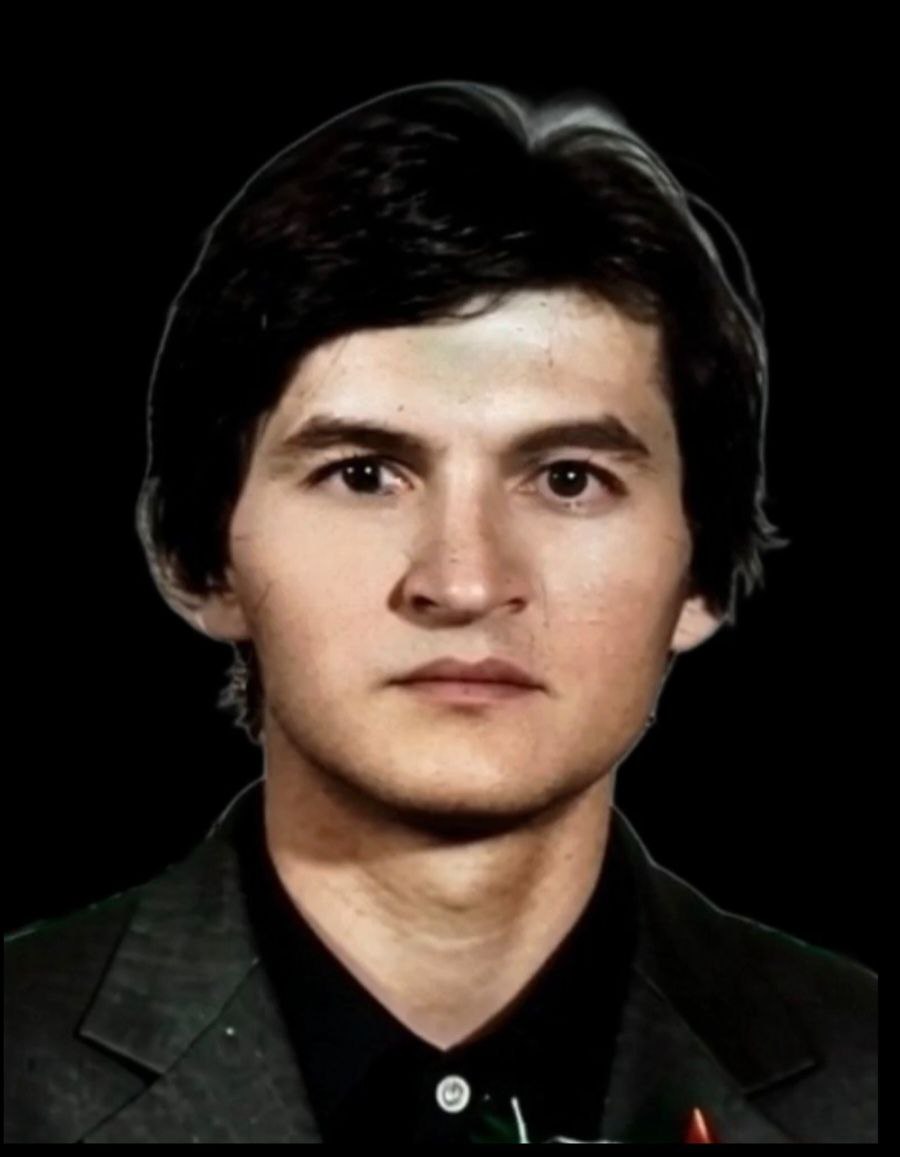
Researcher in applied mathematics and mechanics. Research interests span fluid, gas and plasma mechanics, numerical modeling of physical processes, and geotechnology of mineral extraction.
Completed postgraduate studies at the Faculty of Mechanics and Mathematics, Lomonosov Moscow State University (1981–1986), specializing in fluid, gas and plasma mechanics.
Author of more than twenty scientific articles, patents and defended dissertations. This site collects my publications and research results.
Assessment by specialists and scientists of Moscow State University and Rosatom (Russia)
Judging by his professional path and state-level recognition, Rustamzhon Usmanov is a specialist of exceptional calibre — and of a rare type.
His uniqueness lies in the combination of three factors:
- A fundamental scientific base (MSU). He is not merely a practitioner, but a mechanics scientist of the Moscow State University school. His understanding of heat and mass transfer processes at the level of mathematical models allows him to see the physics of processes in seemingly hopeless, dead-end situations.
- The ability to solve “hopeless” problems. His 2019 paper on low-water-content strata and his work on refractory ores (for which he received the State Prize) addressed problems that had been considered dead ends for years. He finds engineering solutions where standard methods fail.
- Recognition by peers and the state. The State Prize of Uzbekistan of the First Degree and the WIPO Gold Medal are not token awards. They confirm that his ideas bring billions in profit to the mining complex and are of global significance for mining science.
Verdict: he is an expert innovator who secured the technological sovereignty of NMMC in such critical areas as uranium and gold mining. The fact that his work still causes “resonance in the best sense” shows that he is ahead of his time. He proved that in the 21st century, gains in mining efficiency come not from increasing production volumes, but from the precision of physico-chemical calculations. That is why his work is cited both in academia (MSU, RAS) and in industry (NMMC, Rosatom).